
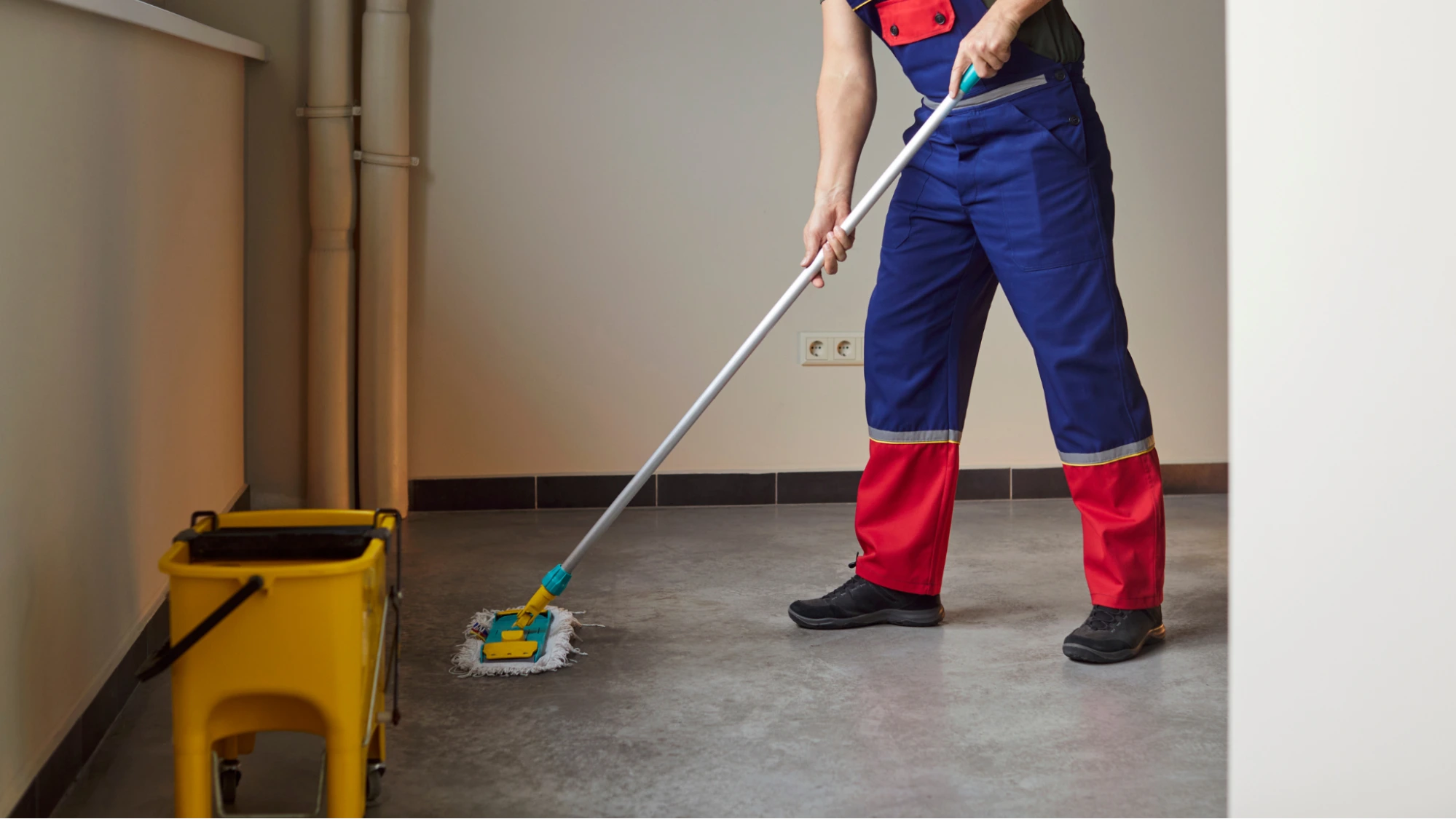
If you manage commercial property in Fairfield or New Haven County, the floors are usually the first thing tenants notice and the first thing they complain about. Scuffed tile in a lobby. Dull hardwood in a law office. Traffic lanes were worn into the carpet outside the elevator. These small details quietly shape how a building feels.
Commercial floor cleaning services cover everything that keeps those surfaces looking right and lasting longer: scheduled vacuuming and mopping, hot water extraction for carpet, scrubbing and recoating hard surfaces, stripping and waxing where it applies, and surface-specific care for hardwood, tile, stone, and concrete. The work runs on a routine schedule and includes deeper treatments at intervals you set with your provider.
This guide walks through the floor types you’ll find in most CT commercial buildings, what professional cleaning actually involves, how often each surface needs attention, and how to choose a partner who won’t damage finishes you can’t afford to replace.
The most common floor types in CT commercial buildings
Walk into ten commercial buildings around Stamford, Greenwich, or New Haven, and you’ll see roughly the same mix.
Lobbies usually run polished stone or large-format tile because they take heavy foot traffic and need to look sharp under direct light. Offices lean on carpet tile or broadloom in conference rooms, with hardwood or luxury vinyl in executive suites. Hallways and back-of-house areas tend to use vinyl composition tile (VCT) or sealed concrete. Medical and dental tenants almost always have sheet vinyl with welded seams for sanitary reasons. Restaurants and retail spaces inside mixed-use buildings often have a combination: tile in customer areas, quarry tile or epoxy in kitchens.
Why does this matter? Because every one of these surfaces reacts differently to water, pH, abrasion, and chemistry. A crew that cleans a marble lobby the same way they clean a vinyl hallway is going to ruin one of them. Knowing your floor mix is the first step in scoping any commercial cleaning contract.
What professional commercial floor cleaning actually involves
There’s a real gap between running a vacuum and a mop and doing professional floor care. A commercial floor cleaning company should be working on a layered schedule:
- Routine work: dust mopping, wet mopping with the right chemistry for each surface, spot cleaning, vacuuming carpet with commercial-grade equipment, and maintaining walk-off mats at entrances.
- Periodic work: machine scrubbing hard floors, low-moisture or hot water extraction on carpet, and edge detailing around baseboards and corners where dirt builds up.
- Restorative work: stripping and refinishing VCT, recoating hardwood, deep extraction on carpet, honing and polishing stone, grout cleaning, and resealing.
A good provider documents what was done on each visit, flags surfaces that need restorative work before they fail, and adjusts the rotation as building usage changes. That last piece matters more than people realize. A floor plan that worked when a building was 60% occupied stops working at 95%.
Hardwood, tile, carpet, and stone: different surfaces, different protocols
Each surface has its own rules, and getting it wrong is expensive.
- Hardwood: Hardwood floors hate standing water. The protocol is dust mopping daily, damp mopping with a neutral pH cleaner, and screening and recoating with polyurethane every few years, depending on traffic. A hardwood floor cleaning service that uses dripping string mops will warp boards within a season.
- Tile and grout: Tile is forgiving on the surface and brutal in the grout. The tile face cleans up easily, but the grout collects dirt, mop water residue, and soap film. Twice-a-year hot water extraction with grout-safe chemistry, followed by resealing every two or three years, is what keeps grout from going gray.
- Carpet: Commercial carpet cleaning service work runs on two tracks: low-moisture encapsulation for high-frequency maintenance and hot water extraction for deep cleaning. Most CT office buildings do well with quarterly low-moisture passes and one or two extractions per year. Restaurants and medical offices need more.
- Stone (marble, granite, travertine, limestone): Stone is the most surface-specific of the bunch. Acidic cleaners etch it. The wrong pad dulls it. Proper care means neutral cleaners, occasional honing or polishing with diamond pads, and stone-safe sealers. This is where untrained crews do the most damage.
How often should commercial floors be professionally cleaned?
Frequency depends on traffic, surface, and what you’re trying to protect. A reasonable starting point for most CT commercial buildings looks like this:
- Lobby and main entrance hard surfaces: daily light cleaning, weekly machine scrubbing, quarterly restorative work.
- Office carpet: vacuumed three to five times a week, low-moisture cleaning quarterly, full extraction once or twice a year.
- Hallway and common-area hard floors: daily dust mopping, weekly wet cleaning, scrub and recoat every six to twelve months for VCT, screen and recoat hardwood every two to four years.
- Restrooms: daily, no exceptions.
- Stairwells: weekly minimum, more often in heavy-traffic buildings.
These intervals shift with the weather. New England winters bring salt, sand, and slush in on every shoe. From November through March, walk-off matting and stepped-up entry cleaning matter more than almost anything else you can do for your floors.
Choosing the right commercial floor cleaning partner in Connecticut
This is where most vendor relationships succeed or fail. A few questions worth asking before you sign anything:
- Do they have crews trained for the specific surfaces in your building? A company that mainly cleans offices may not have the protocols for the marble in your lobby or the quarry tile in your tenant’s kitchen.
- Do they assign the same crew to your property? Rotating strangers means rotating quality. Crews that know your building know which corners collect dirt, which finishes are sensitive, and which tenants care most.
- Do they document what they did? A simple service log, signed and dated, is the difference between accountability and excuses.
- Do they communicate proactively? If a finish is failing, you want to hear about it from your cleaning provider before a tenant points it out.
- Are they insured to the standards your ownership requires? Commercial liability and workers’ comp coverage should be confirmed, not assumed.
Common questions facility managers ask about commercial floor cleaning
What do commercial floor cleaning services include?
Commercial floor cleaning services include routine vacuuming, mopping, and spot cleaning on a regular schedule, along with periodic deep cleaning like hot water extraction for carpet and machine scrubbing for hard surfaces. They also cover restorative work such as stripping and refinishing VCT, recoating hardwood, and resealing stone or grout. The exact scope depends on your floor types and traffic levels.
How much does commercial floor cleaning cost in Connecticut?
Pricing varies based on square footage, surface type, frequency, and the scope of restorative work included. Recurring contracts that bundle routine cleaning with periodic deep treatments usually cost less per visit than one-off jobs. A walkthrough is the most reliable way to get an accurate quote because the floor mix and condition matter as much as the size.
Is commercial floor cleaning different from janitorial service?
Yes. Janitorial service typically covers daily and weekly tasks across the whole building, including basic floor care. Commercial floor cleaning focuses specifically on the equipment, chemistry, and protocols needed to maintain different floor surfaces properly, including periodic and restorative work that goes beyond a standard janitorial scope.
Can the wrong cleaning method damage commercial floors?
Yes, and it’s one of the most common reasons floors wear out early. Using acidic cleaners on stone, too much water on hardwood, or the wrong pad on a polished surface can cause damage that’s costly to reverse. A trained commercial floor cleaning company matches the method and chemistry to each surface.
How often should office carpets be professionally cleaned?
Most office carpets need low-moisture maintenance cleaning quarterly and full hot water extraction once or twice a year. Heavier traffic areas, food service environments, and medical offices may need more frequent extraction. Vacuuming three to five times a week between professional cleanings is the baseline for any commercial space.
Your Commercial Floor Cleaning Partner In Connecticut
Orange Cleaning Services has worked with property managers across Fairfield and New Haven County for thirty-five years, with commercial floor care built into recurring janitorial contracts and specialized programs for buildings with high-end finishes. The same crew shows up every visit, the work gets documented, and the protocols match what your building actually has.
If you’re rethinking floor care for one property or a whole portfolio, the team can walk the building, identify what your current setup is missing, and put together a plan that fits how your tenants use the space. Contact Orange Cleaning Services today to schedule a walkthrough at your CT property.